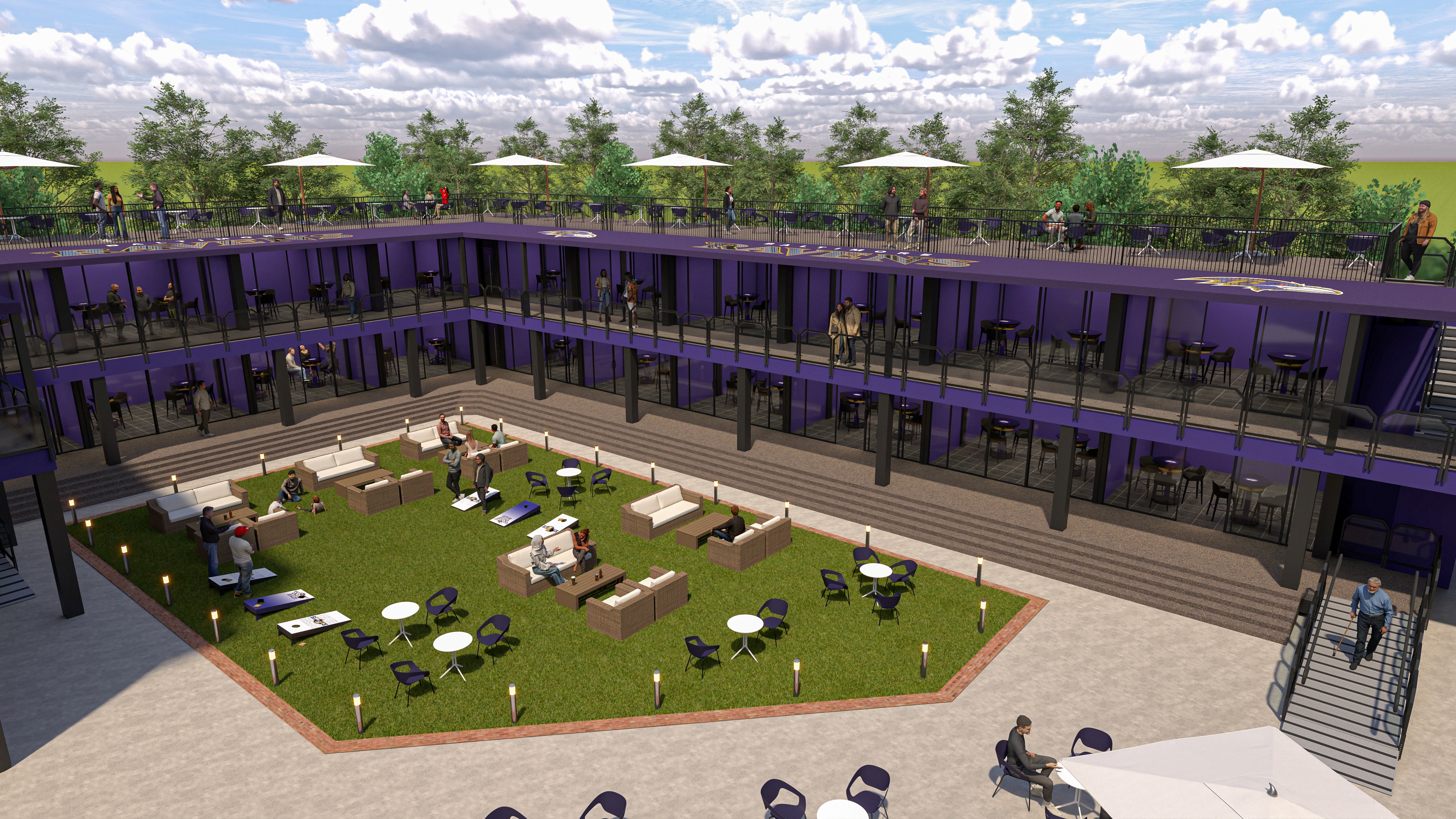
In the high-stakes world of sports and live events, timing is everything. Seasons are short. Sponsorship cycles move fast. Fan expectations evolve constantly. Against this backdrop, investing in hospitality infrastructure that takes years to build and decades to pay off can limit opportunity.
That’s why modular sports hospitality structures are rapidly outperforming traditional brick-and-mortar developments when it comes to return on investment (ROI). Here’s why.
- Speed to Revenue: Months Vs. Years
- Traditional stadium expansions or permanent hospitality buildings often require 18–36 months of planning and permitting, lengthy construction timelines and high upfront capital outlay. Modular hospitality structures, by contrast, can be designed, fabricated, and installed in a matter of weeks or a few months.Modular hospitality structures, by contrast, can be designed, fabricated, and installed in a matter of weeks or a few months.Why this accelerates ROI:
- Revenue begins during the same season the investment is made
- Sponsors and corporate buyers can be secured for immediate activation
- Event-driven opportunities (tournaments, playoffs, one-off global events) can be monetized without delay
The faster you can activate inventory, the faster cash flow begins.Modular hospitality structures, by contrast, can be designed, fabricated, and installed in a matter of weeks or a few months.Why this accelerates ROI:- Revenue begins during the same season the investment is made
- Sponsors and corporate buyers can be secured for immediate activation
- Event-driven opportunities (tournaments, playoffs, one-off global events) can be monetized without delay
The faster you can activate inventory, the faster cash flow begins.
- Lower Capital Expenditure = Lower Risk
- Brick-and-mortar builds demand heavy capital commitments — foundations, steel, utilities, long-term maintenance. Once built, they are fixed assets that can’t adapt easily.Modular structures require:
- Lower upfront capital
- No deep foundations in many cases
- Reduced site preparation
- Scalable investment (build what you need now, expand later)
This means operators can:- Test premium hospitality demand before permanent expansion
- Scale up incrementally based on real market performance
- Avoid long-term debt tied to fixed structures
Lower capital outlay shortens the payback period dramatically.
- Revenue Flexibility Across Events
- Permanent hospitality spaces are locked to one venue and one configuration. Modular hospitality structures can be:
- Relocated between venues
- Reconfigured for different event types.
- Branded uniquely per sponsor or tournament
- Upscaled for playoffs or international competitions.
- Modular hospitality structures can be:For example, a modular suite used during a football season can be redeployed for:
- Golf tournaments
- Motorsport weekends
- Rugby internationals
- Music festivals
The same asset generates revenue multiple times per year in different locations — compounding ROI.
- Premium Experience Without Permanent Overhead
- Modern modular structures are no longer “temporary tents.” Today’s offerings include:
- Double-deck hospitality units
- Climate-controlled environments
- Glass-fronted viewing decks
- Integrate
- d AV and broadcast facilities
- High-end catering infrastructure
Fans and corporate clients experience a premium environment — without operators carrying the long-term maintenance and depreciation costs of permanent builds. You’re delivering luxury-level pricing power without 30-year amortization schedules.
- Faster Sponsorship Monetization
- Corporate sponsors want visibility now — not after a two-year construction cycle.Modular hospitality allows:
- Rapid branding integration
- Event-specific sponsor activation
- Bespoke fit-outs aligned to campaign cycles
- Short-term naming rights deals
Because structures can be customized per event, sponsors are often willing to pay premium rates for exclusivity and immediacy.That immediacy equals accelerated revenue realization.
- Reduced Long-Term Maintenance Liability
- Brick-and-mortar hospitality facilities carry ongoing:
- Structural maintenance
- Utility infrastructure upkeep
- Compliance upgrades
- Insurance and property costs
Modular solutions often operate under:- Short-term deployment models
- Leasing or asset-sharing agreements
- Off-site storage and refurbishment cycles
Operators maintain asset flexibility and avoid permanent overhead dragging down ROI over time.
- Data-Driven Expansion Strategy
- Modular hospitality provides something brick-and-mortar can’t: real-world demand testing.Operators can:
- Install a set number of premium suites
- Measure occupancy rates and pricing tolerance
- Adjust inventory dynamically
- Expand only when proven
Instead of betting millions on projected demand, you build based on demonstrated performance — dramatically improving capital efficiency.
- Ideal for Major Tournaments and Temporary Capacity Surges
- Mega-events often require temporary capacity expansion:
- World Cups
- International championships
- Playoff series
- One-off exhibition games
- Building permanent structures for temporary demand is rarely financially rational. Modular hospitality perfectly aligns with peak-demand economics — monetize the surge, then redeploy assets elsewhere.
- ESG and Sustainability Considerations
- Increasingly, venue operators are measured on sustainability metrics.Modular structures support:
- Reusability across multiple events
- Reduced material waste
- Lower permanent land impact
- Flexible lifecycle management
Instead of constructing new permanent buildings for short-term use, modular assets are reused — improving environmental performance and stakeholder perception.
- The ROI Equation: A Simple Comparison
Factor Brick-and-Mortar Modular Hospitality
Time to revenue 2-3 years Weeks to months
Upfront capital High Moderate / scalable
Flexibility Fixed Relocatable & adaptable
Risk exposure Long-term Short-cycle
Payback period Long Accelerated
Demand testing Difficult Built-in
When speed, flexibility, and capital efficiency are prioritized, modular hospitality structures consistently deliver faster ROI.
- Final Thoughts
- The sports and events industry is shifting toward agility.Venues no longer operate on static 30-year planning cycles. Revenue streams must adapt season by season, sponsor by sponsor, event by event.Modular sports hospitality structures offer:
- Immediate monetization
- Reduced capital risk
- Multi-event utilization
- Faster payback cycles
- Strategic flexibility
In a market defined by opportunity windows, the ability to generate revenue this season — not three seasons from now — is often the difference between growth and stagnation.For operators focused on maximizing return while minimizing exposure, modular isn’t just a temporary solution.